JEE preparation
Know where the marks go. Plan what to do about it.
RyzingStar is two connected web apps for a student preparing for JEE. DeepleLens reads every test and works out where marks are lost. Arjuna turns that into a plan for the year, the week and today, and checks that the plan is being followed.
Built by a parent for a JEE aspirant at home, and in use there now.
- 13,000+JEE Main past-paper questions, 2019–2026, to practise from
- In codeEvery score and ranking is computed, never written by a model
- WeeklyTest, diagnosis, plan, review: one loop across both apps
How the two apps work together
JEE Main is three hours, 75 questions, +4 for a right answer and −1 for a wrong one. Marks are rarely lost evenly: a few chapters, a few minutes sunk into one question, a few habits under the clock. Generic advice can't see these. The student's own test record can, so everything starts from it.
- Student
Sit a test
A coaching-institute test, or a full paper on DeepleLens's copy of the exam screen.
- DeepleLens
Measure
Marks, negative marking, time per question and a mistake category for every wrong or skipped answer.
- DeepleLens
Rank
Chapters ordered by the marks they put at risk in a real paper.
- Arjuna
Plan
The week's order, today's tasks and a fix for each repeating mistake follow the ranking.
- Arjuna
Review
On Sunday, parent and student go through the numbers, the gaps and three priorities.
One owner per fact. DeepleLens owns every measurement; Arjuna reads it with a read-only key and keeps no copy of its own.
Measurement
DeepleLens
How is the student actually performing?
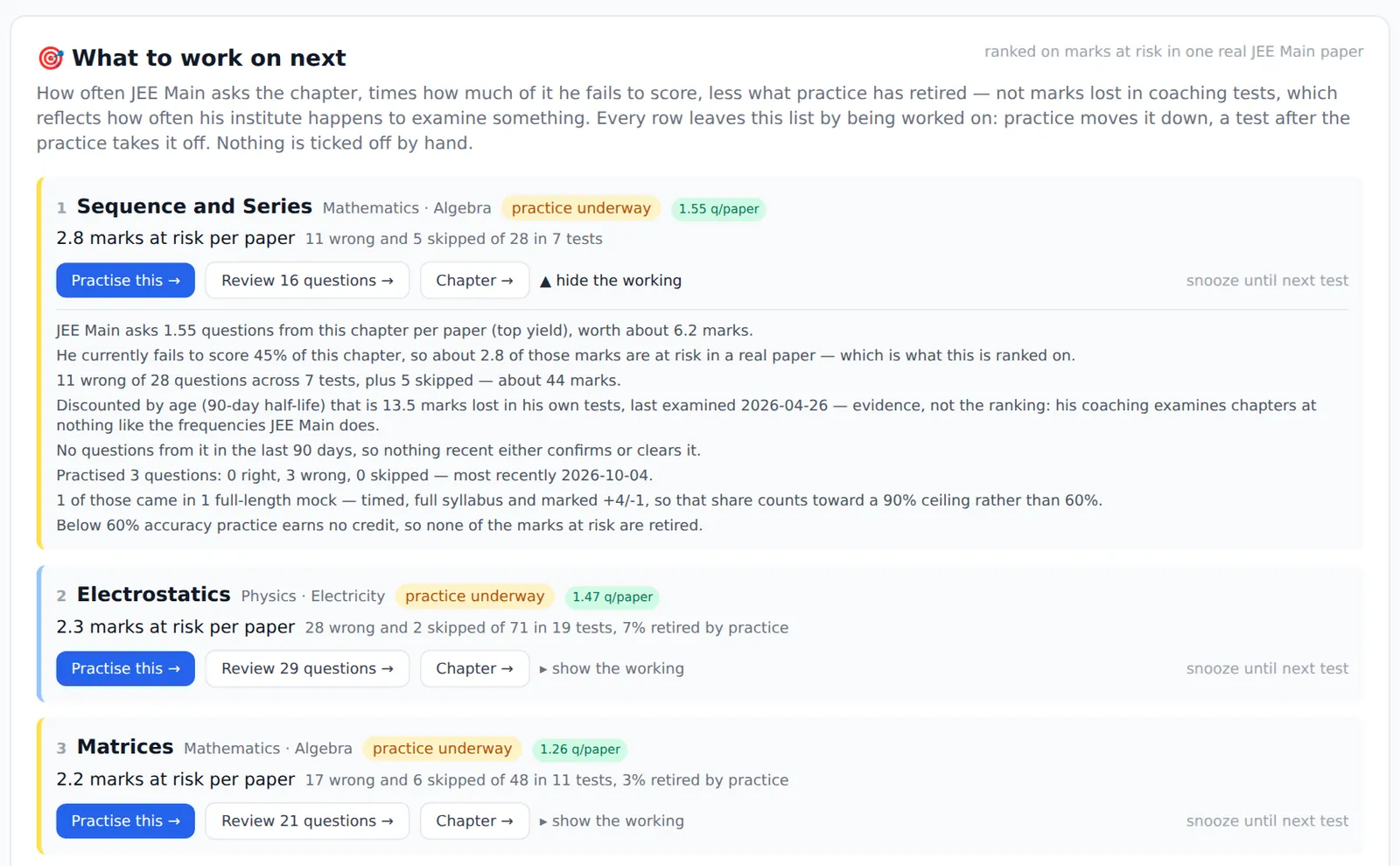
What to work on next
One ranked list of chapters, ordered by the marks each puts at risk in a real JEE Main paper: how often the exam asks it, how often the student gets it wrong, and how much practice has already recovered.
A chapter with little data is pulled toward the student's overall rate, so one bad test can't put it at the top. Every row shows its working.
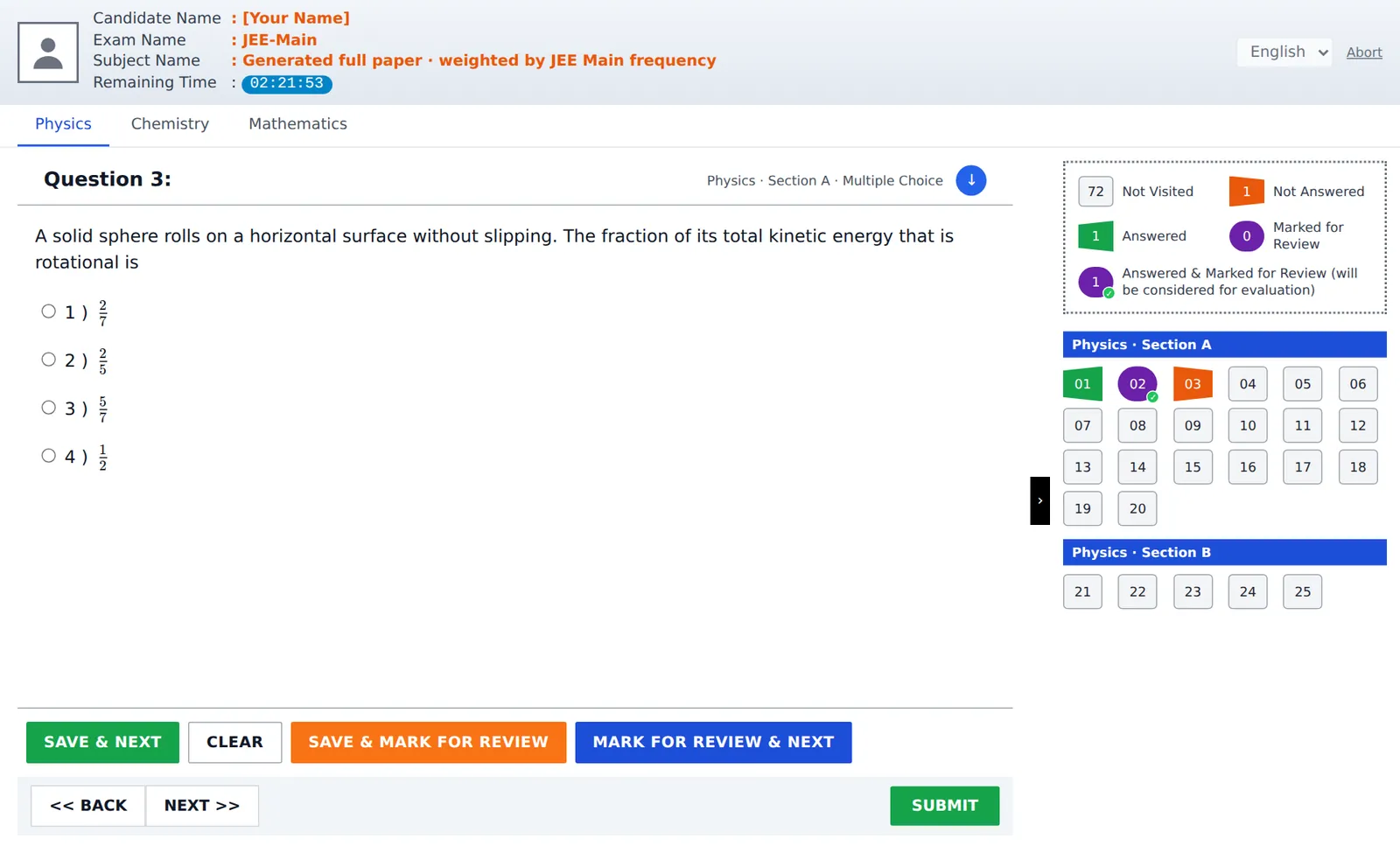
Full papers on the exam screen
A copy of the NTA interface, with Save & Next, Mark for Review and the question palette, so the format is familiar before exam day.
A training mode puts a clock on each question instead.
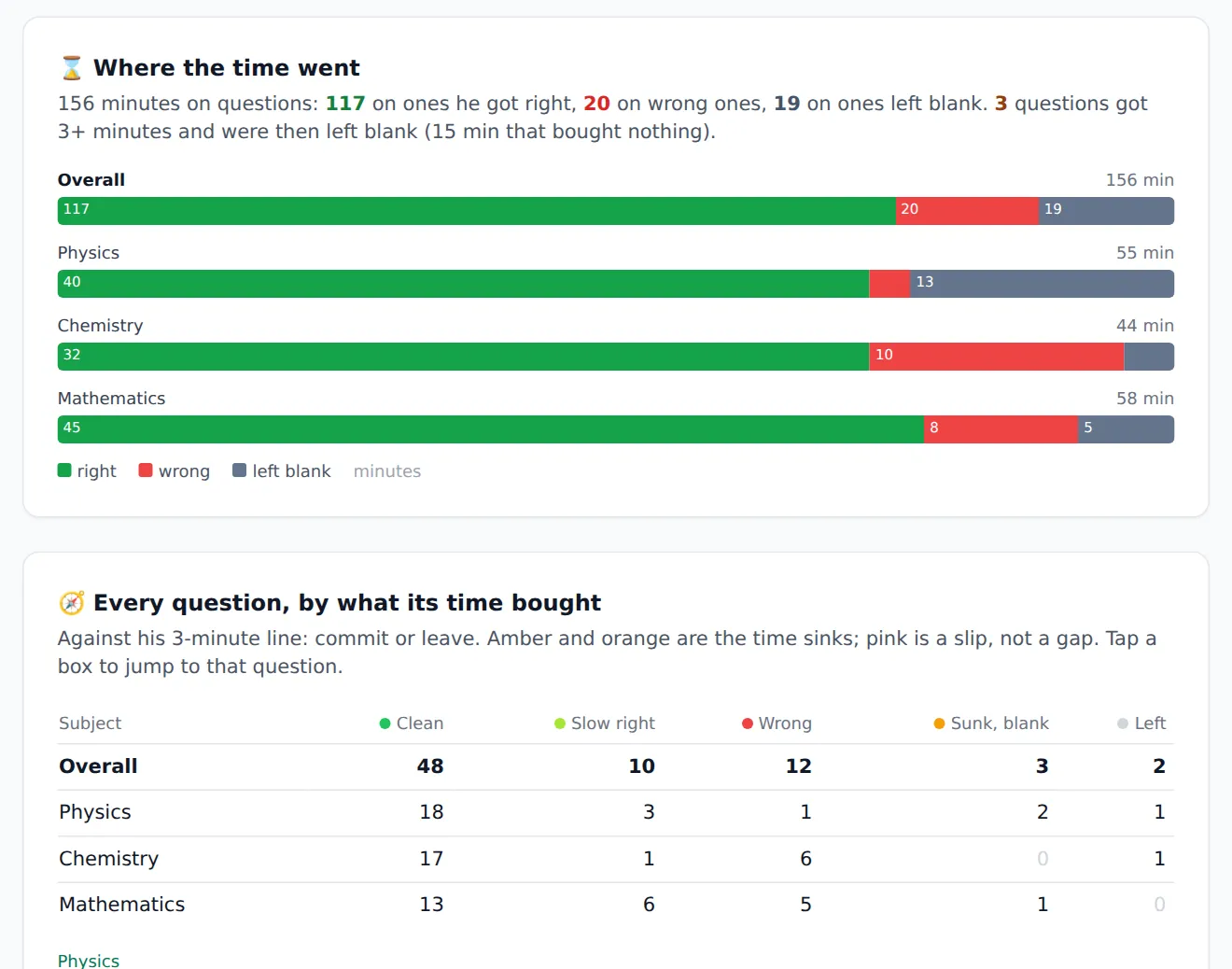
What happened in the paper
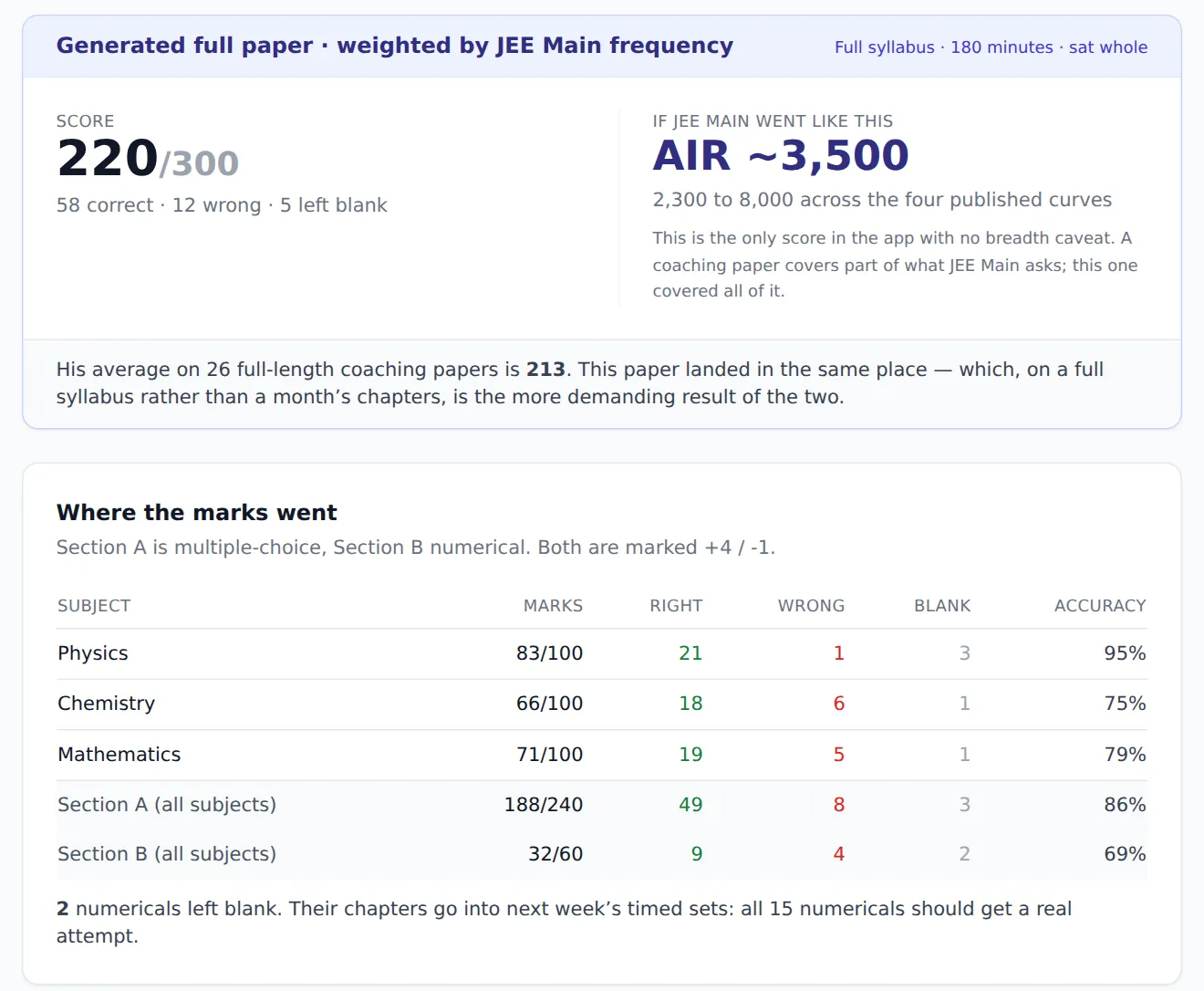
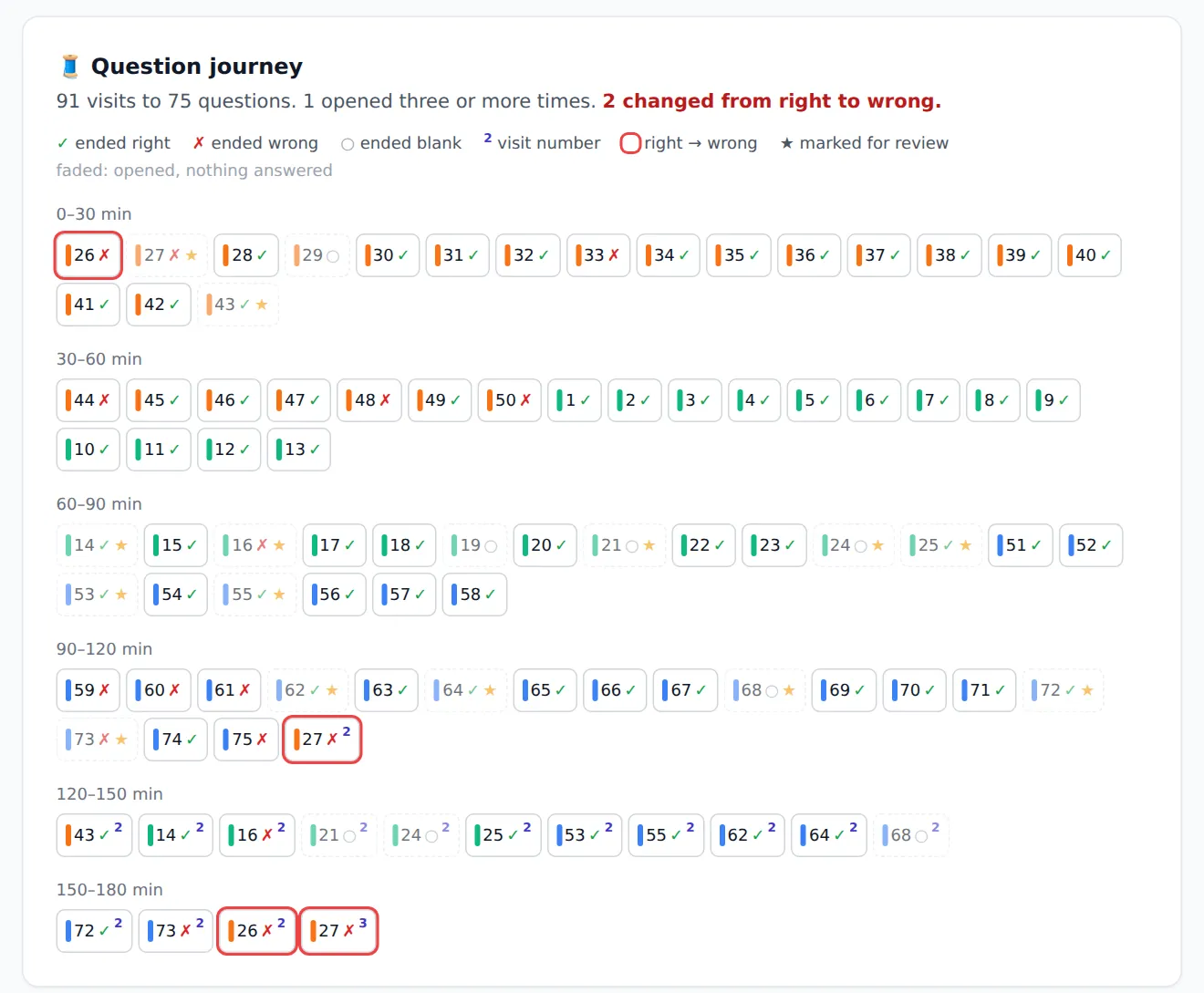
The score and a rank range read from several published rank curves, with the spread shown. Then where the minutes went, the order the student moved through the subjects, and every visit to every question, including answers changed from right to wrong.
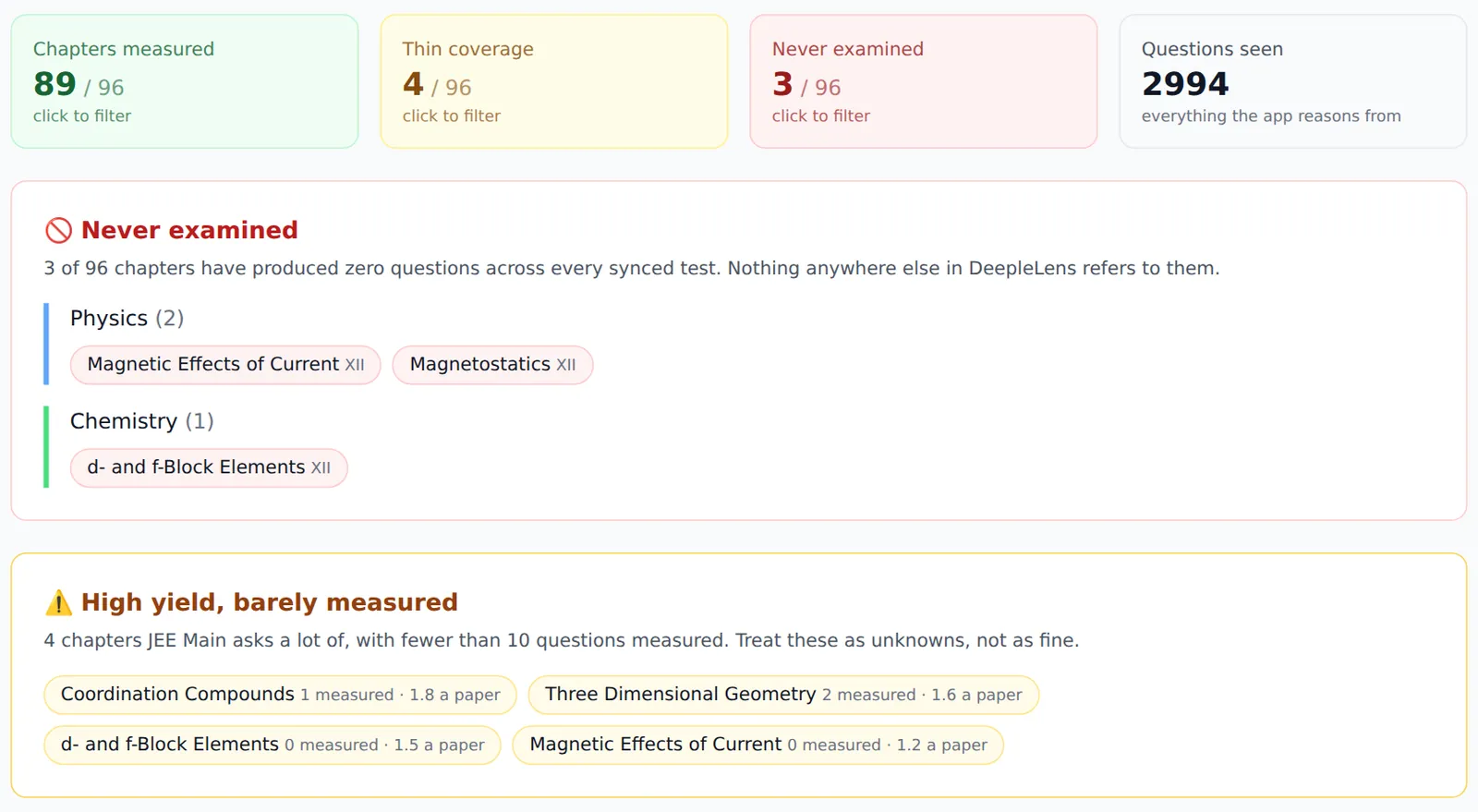
What the tests haven't measured
Which chapters the tests have covered well, thinly or not at all, weighted by how often the exam asks them. A high-yield chapter that has never been tested is a risk the scores can't show.
Also in DeepleLens
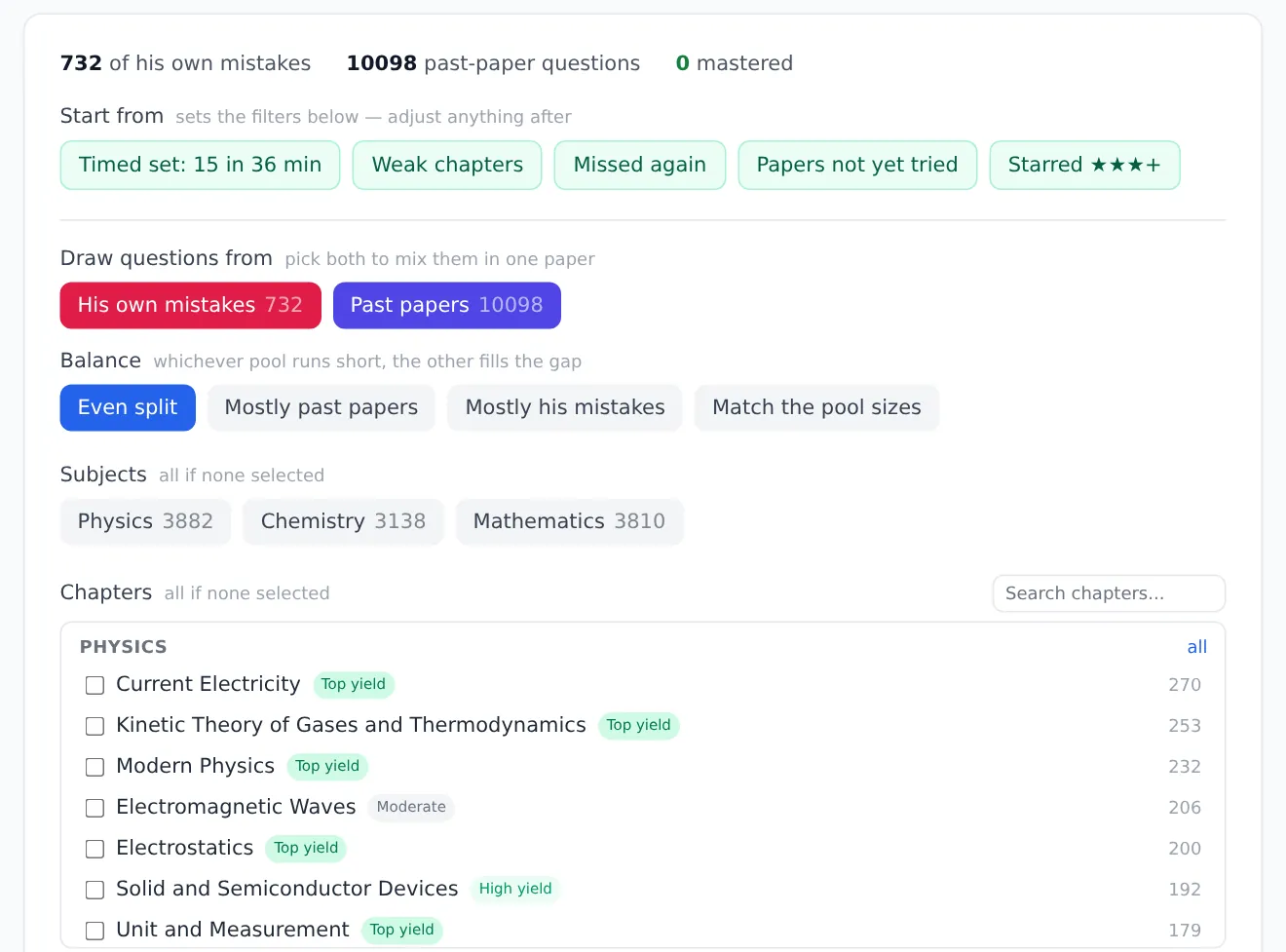
- Practice sets built from 13,000+ past-paper questions and the student's own record
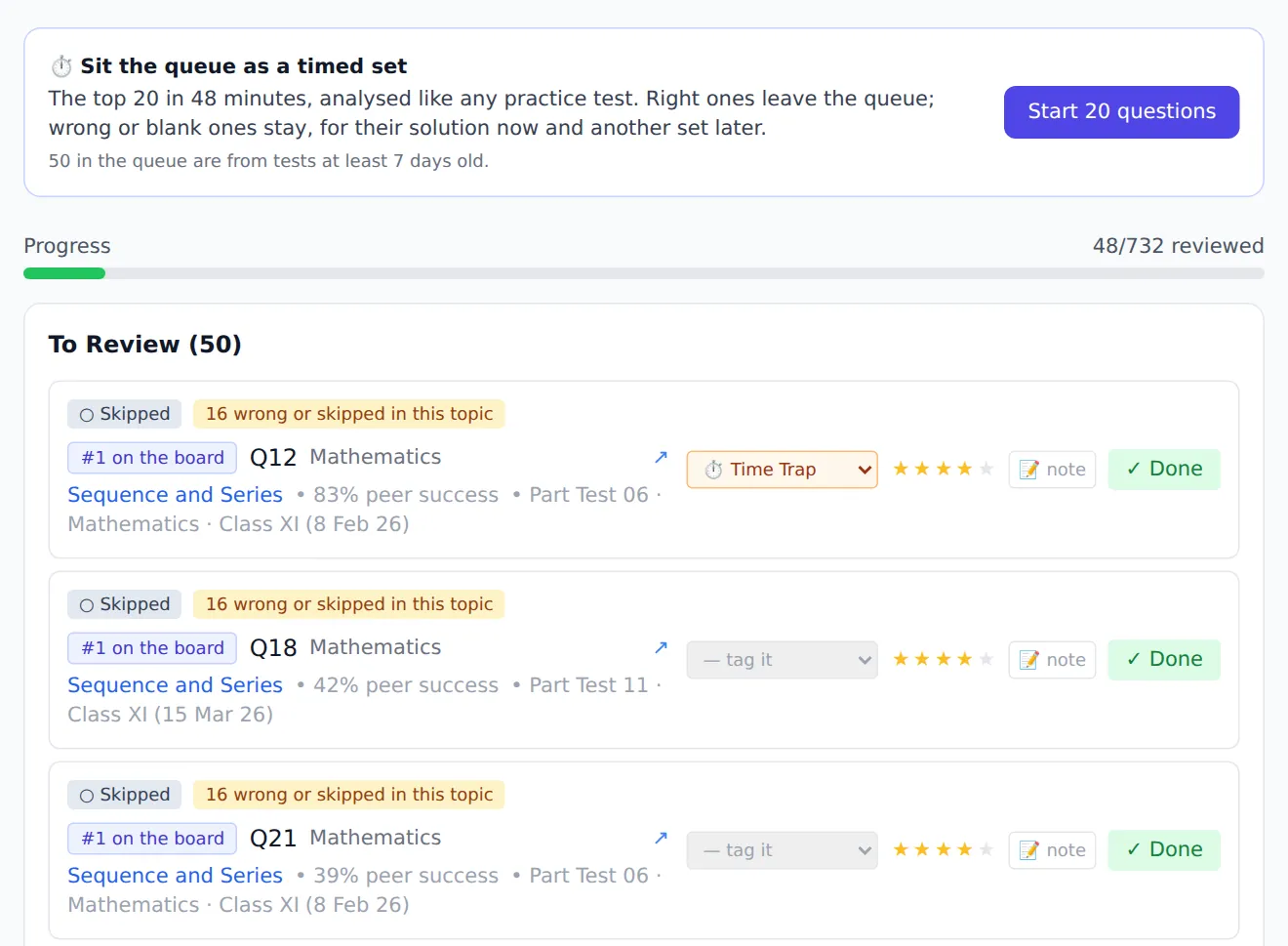
- A review queue of past mistakes: right answers leave it, wrong ones stay
- A chapter page comparing the student with the cohort on the same questions
Process
Arjuna
Is the student doing the right things, at the right time?
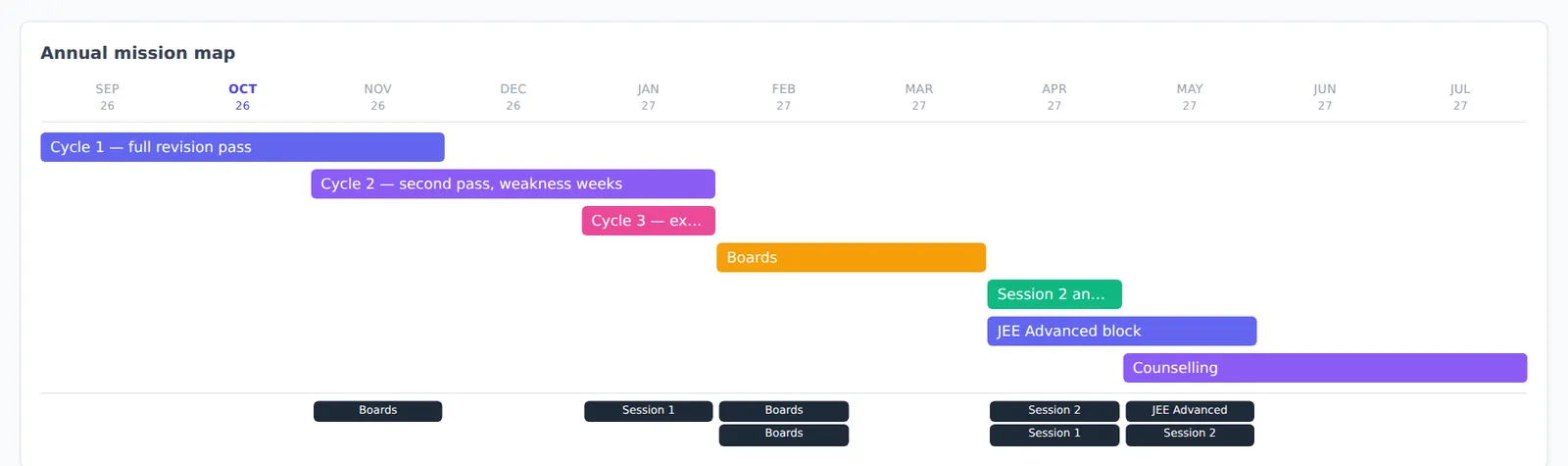
A plan to exam day
Phases, months and weekly tasks, with every exam on one timeline. The plan is data, not a document, so it can be changed in the app and checked against.
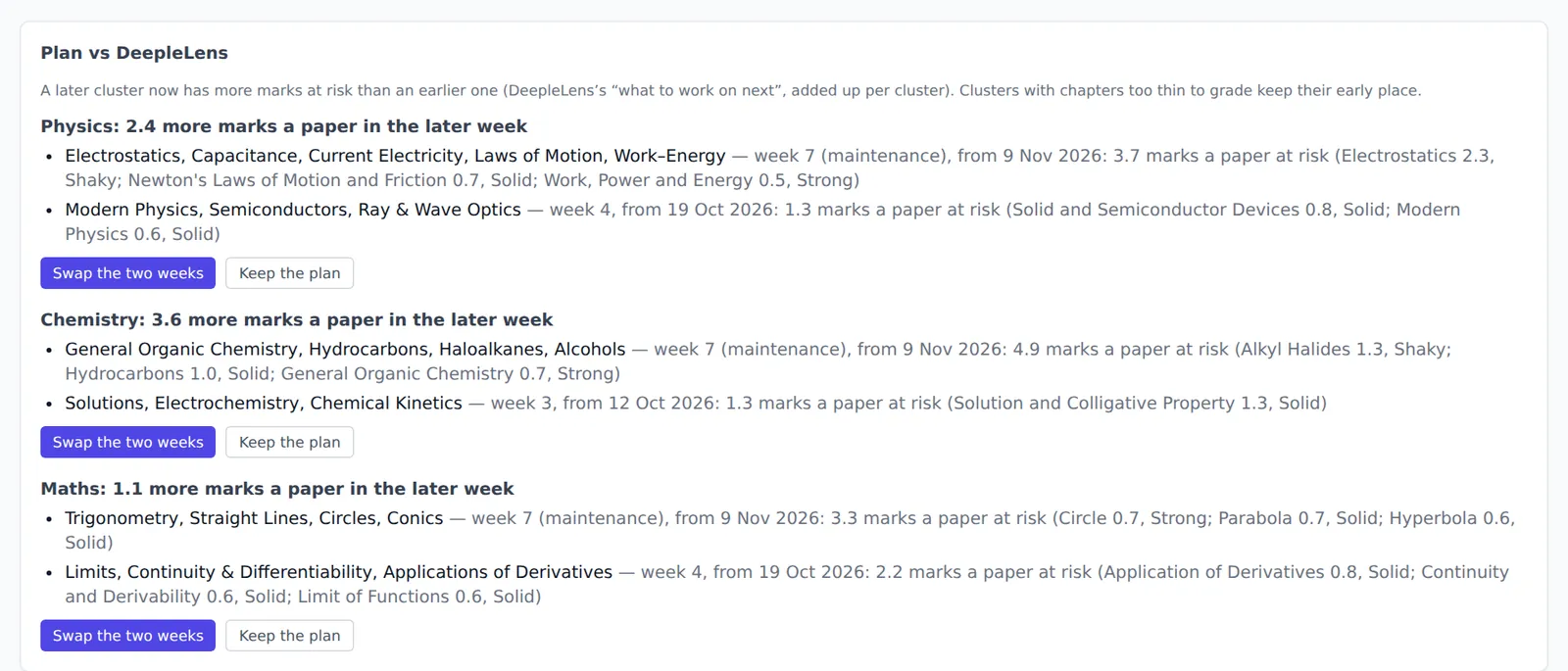
The plan follows the measurements
Arjuna adds up DeepleLens's marks at risk for each block of chapters in the plan. When a later week carries more marks than an earlier one, it proposes swapping the two. The family decides.
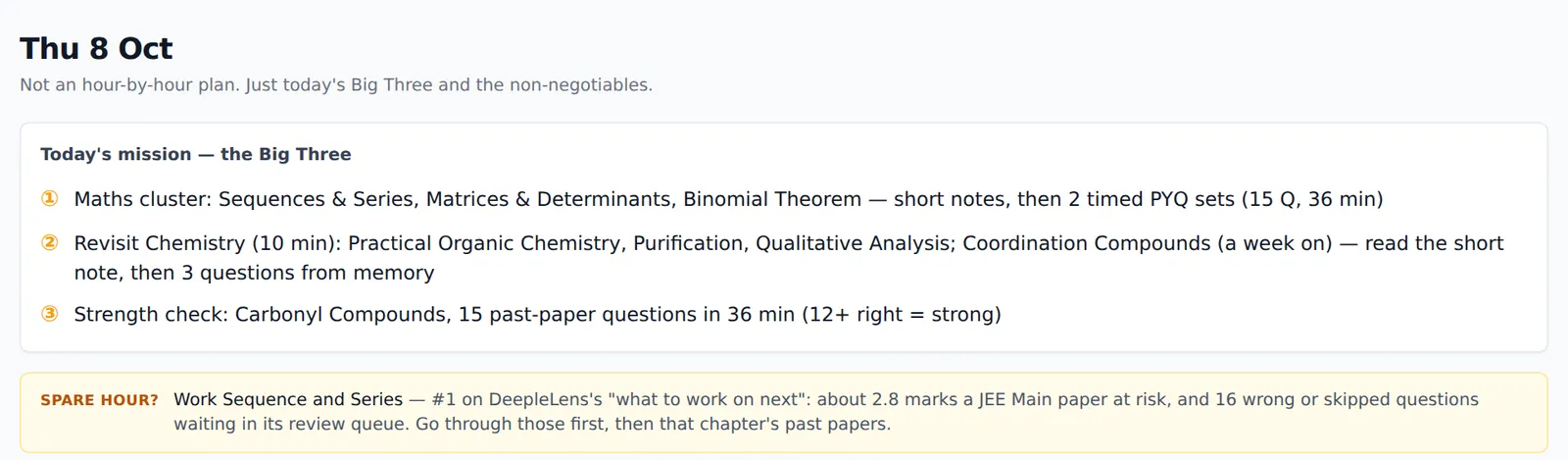
Today: three tasks and a spare hour
Not an hour-by-hour timetable: three tasks for the day, and a spare hour that always goes to the top of DeepleLens's list.
Deep-work blocks, sleep and exercise are logged alongside.
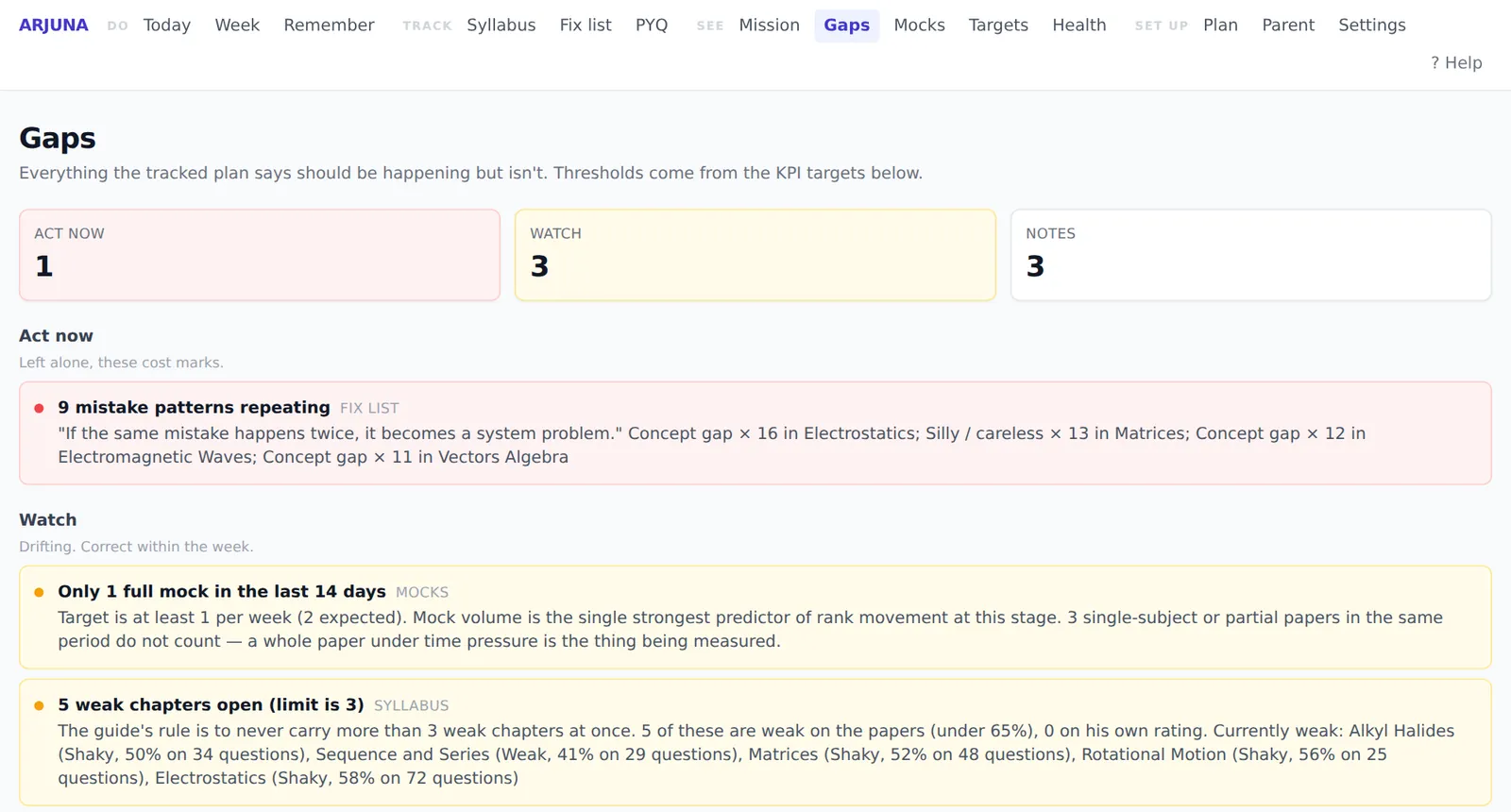
The Gap Engine
What the plan says should be happening and isn't: weak chapters left open, mistakes that keep repeating, too few full papers, self-ratings that disagree with the test results. Each is measured against targets the family sets.
Also in Arjuna
- A fix list: one commitment for each repeating mistake, kept open until the pattern changes
- A weekly Sunday review for parent and student
- Countdowns to every exam, and syllabus milestones checked against what the tests say
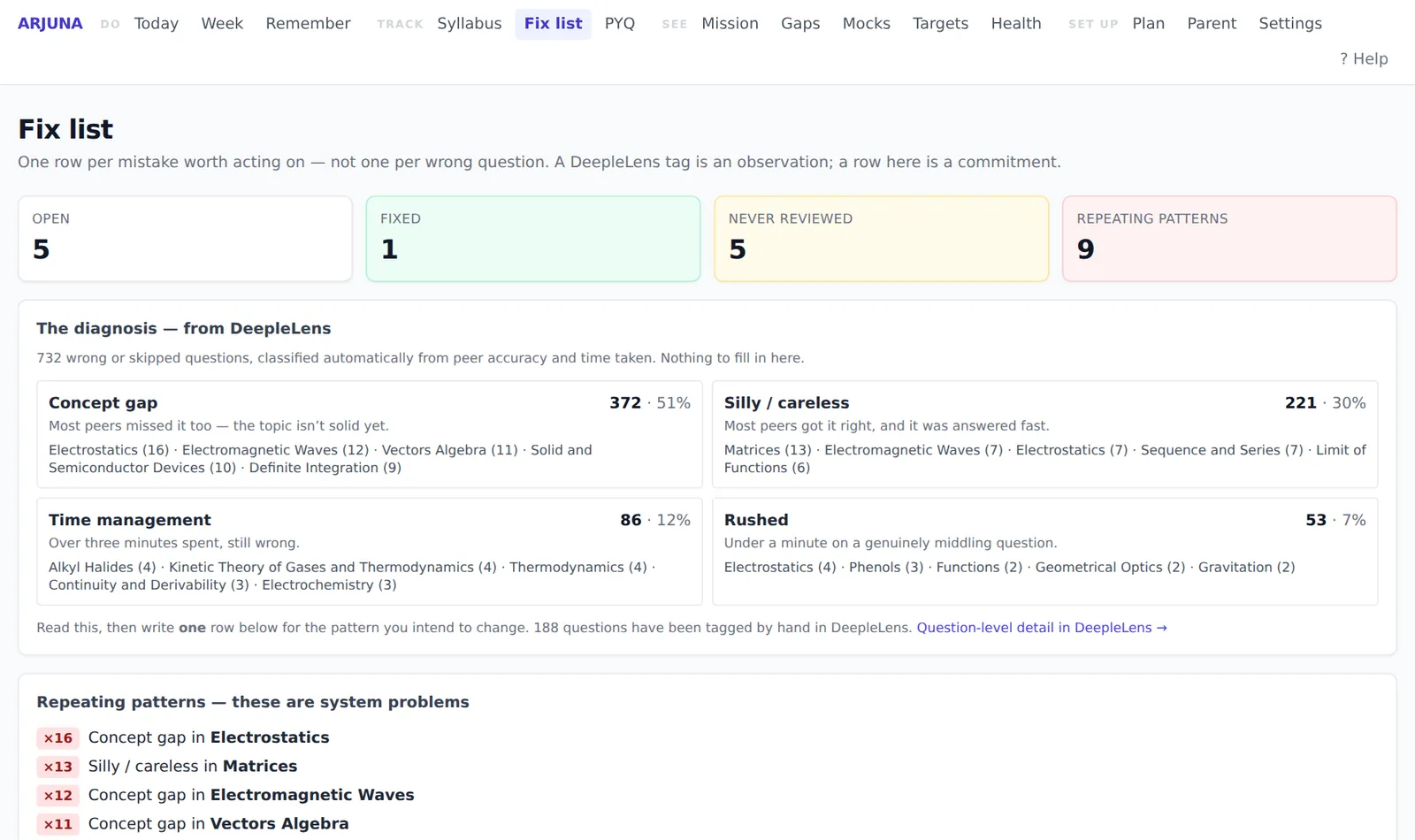
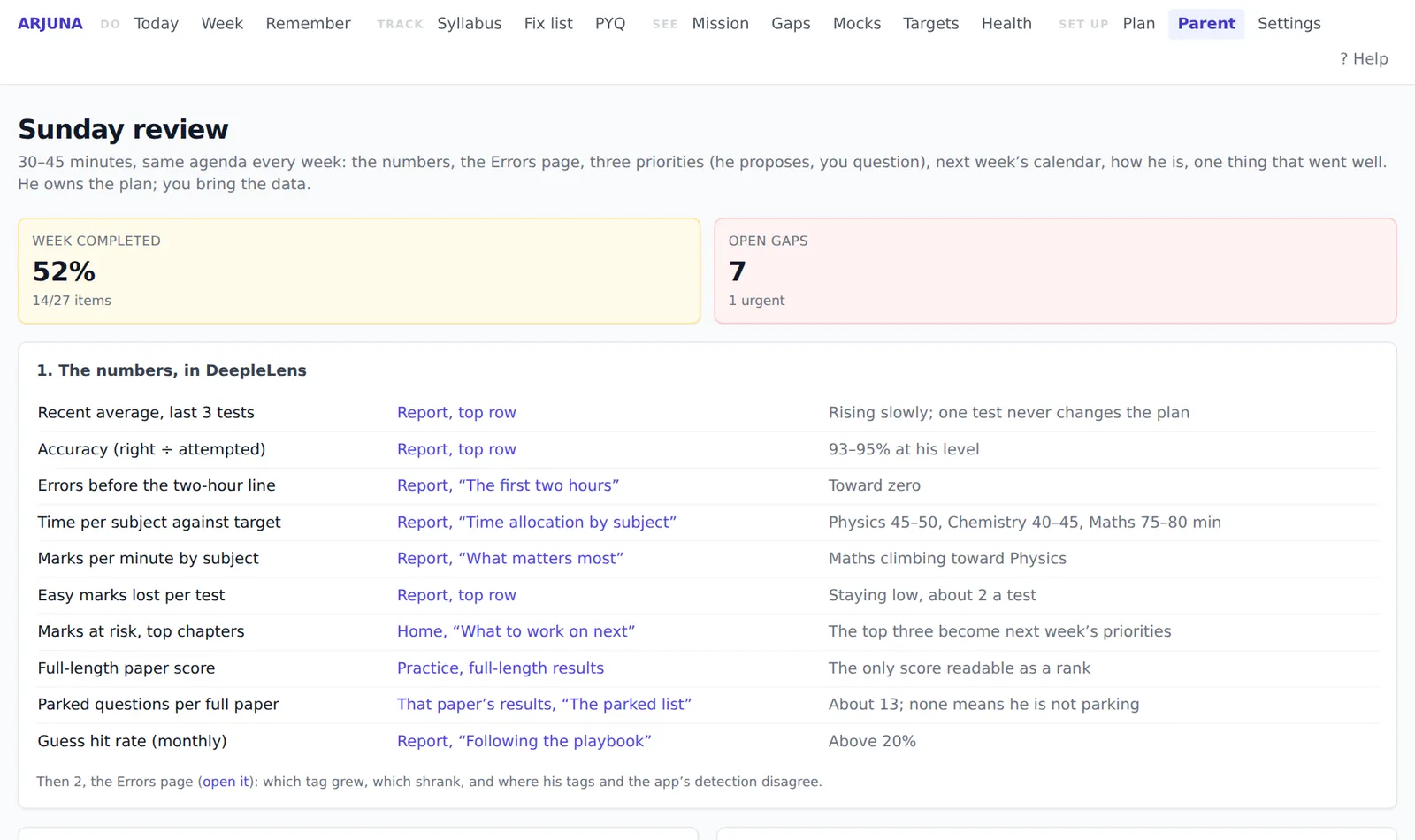
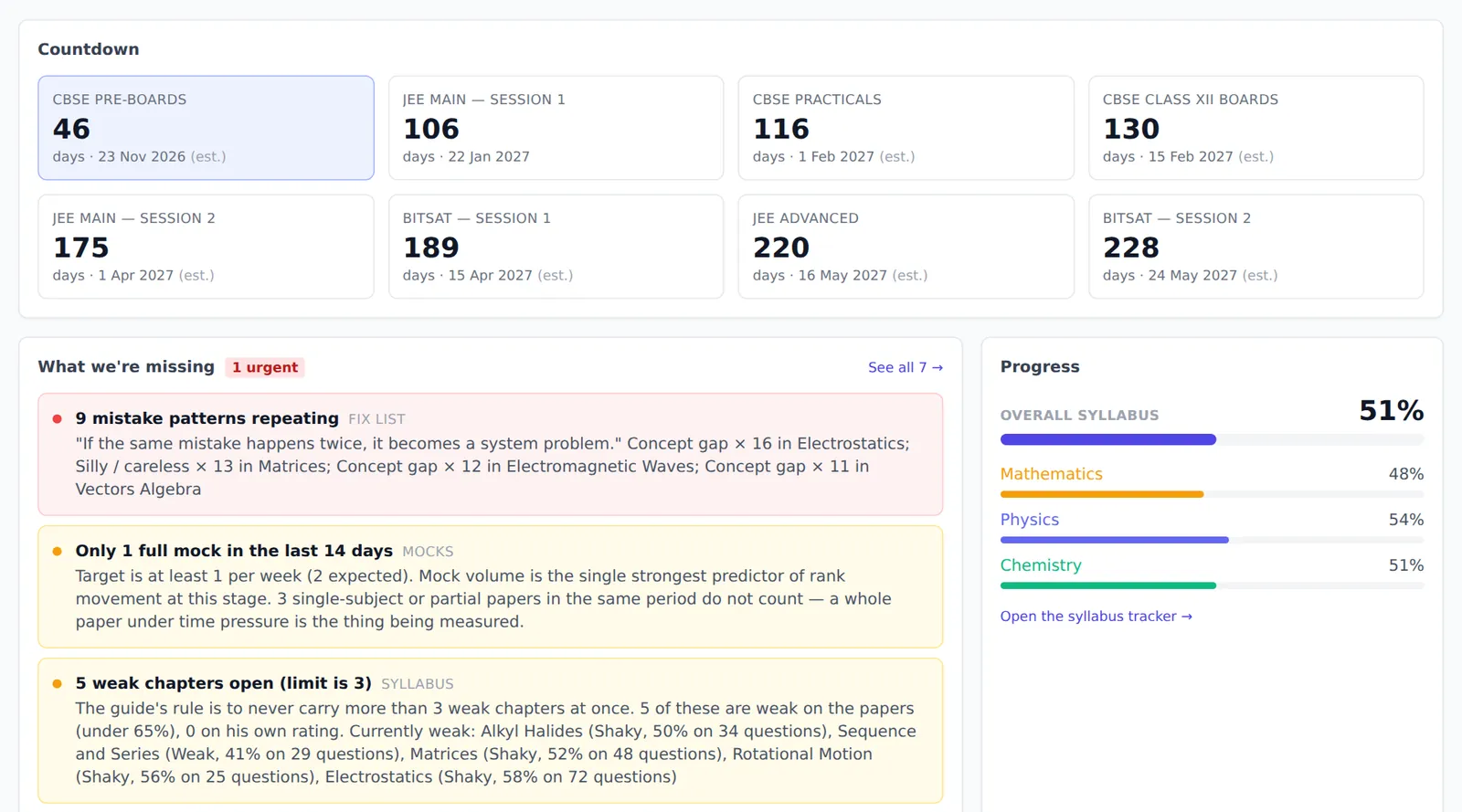
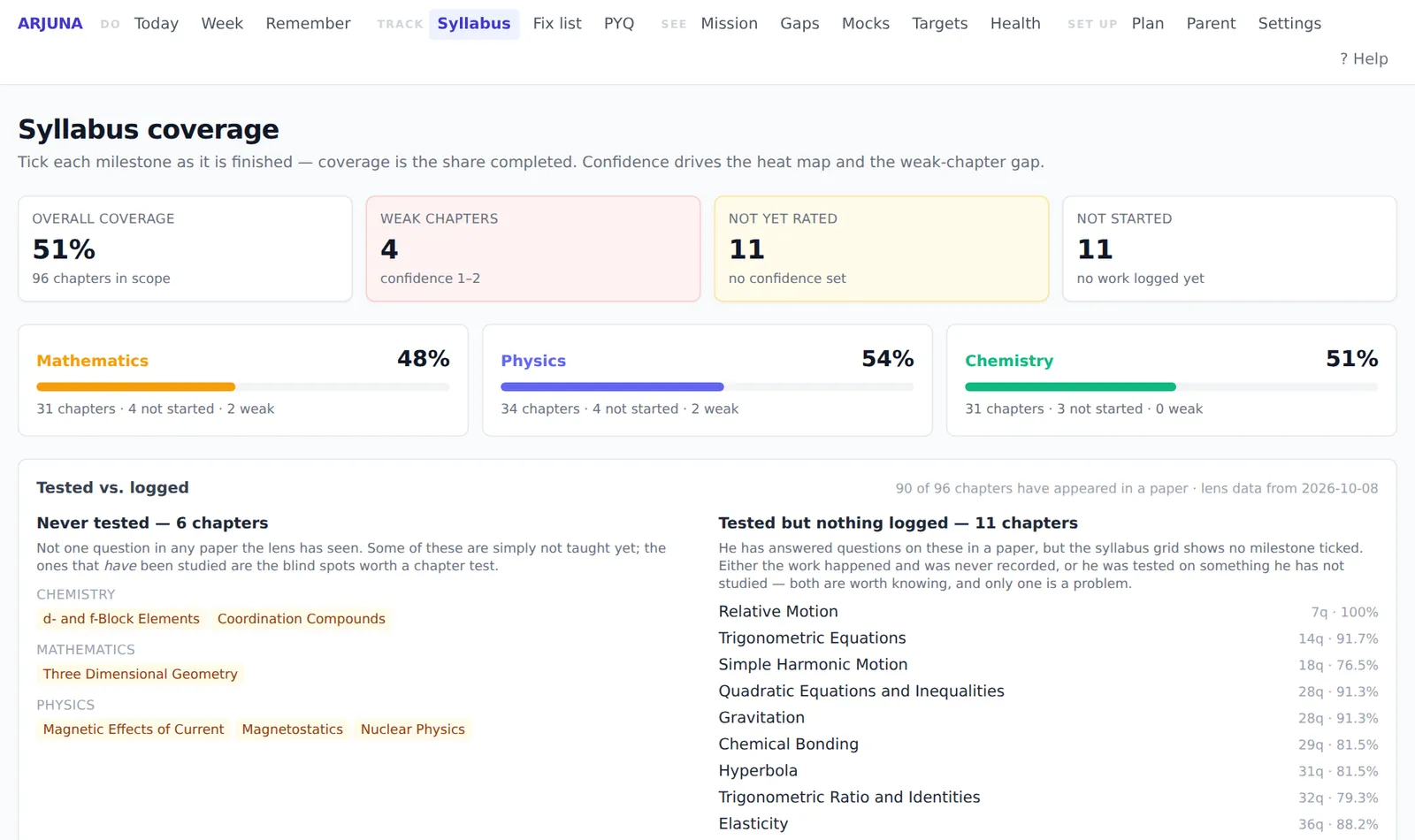
All screens: the real apps, run on a made-up student. Names, scores and questions are invented.
The coach, and how its numbers stay correct
A Claude-based coach answers the student's and parent's questions on the phone: about the test record, the plan, the exam, and worked solutions. It reads DeepleLens through read-only endpoints. A student acts on what it says, so correctness comes before features.
-
Scores are computed, not generated
Code computes marks, rankings and rank ranges, and the same code serves every screen and the coach. Chapter notes written by a model may not state a figure; one that does is rejected before it is stored.
-
Every figure is checked against its source
Each line of an answer that states a fact names its source, and every number on it must be found there, or the answer is blocked and rewritten. This is a program, not an instruction to the model. A separate reviewer then checks the answer for meaning.
-
Solutions are solved twice
A separate solver works each problem before seeing the coach's answer. If they still disagree after a rework, the answer is marked as not verified.
-
Everything is audited overnight
An independent run answers the day's questions afresh and compares. Corrections reach the student next morning; fixes to the coach come with a test case.
Try it: the figure check, in your browser
The board below is computed with the same formula DeepleLens uses, and the coach's answer is generated from its rows. Run the check over the answer, then tamper with one number and run it again.
Priority board sample
marks at risk per paper = exposure × failure rate × (1 − practice recovery)
| # | Chapter | Asked per paper | Marks lost in tests | At risk per paper |
|---|
Exposure is questions per paper × 4 marks. The failure rate is pulled toward the student's overall rate by 20 pseudo-marks, and practice retires at most 60% of the risk. The ranking is by marks at risk in a real paper, not marks lost in tests: notice where Center of Mass lands.
The coach answers sample
Student: What should I work on tonight?
The sources the check reads
How it was built
One person, building with Claude Code: a parent with a software background, building the tools a JEE aspirant at home needed.
- Feb 2026 DeepleLens: test analysis, then the priority board, the exam screen and past-paper practice
- Jul 2026 Arjuna: the plan, the Gap Engine and the weekly review, reading DeepleLens
- Sep 2026 The coach, on the phone, with its checks
Over 320 commits across the three. Next.js, TypeScript and libSQL for the apps; Python and Claude Code for the coach.
Design rules
- One owner for every fact; others read it and never copy it
- Code computes the numbers; models write the words
- Apps read each other with read-only access
- Checks are programs that always run, not instructions a model may forget
Where it stands
In use
- DeepleLens and Arjuna, live as web apps
- The coach, on the phone since September 2026, with its checks on every answer they apply to
- Every coach answer logged, with the family's thumbs up or down, and test cases written from real questions
Next
- The coach reading and updating Arjuna's plan
- Specialised agents for diagnosis, planning and tutoring, with a verifier
- Evaluations in CI, tracing and cost per run
- Opening it to other JEE aspirants, without losing the checks
Today it serves one student at home; there are no other users, pilots or revenue yet.
Student data
- Students are often under 18. Their records live in private databases behind a passcode, and never in a public repository, a demo or this page.
- The coach runs under its own restricted account, with read-only access, and cannot change its own rules.
- Model calls send only the records they need, to the model provider. Before anyone else uses it, these rules will be written down and agreed with each family.
Contact
RyzingStar is built by Nikhil, a solo, bootstrapped founder.